Eye Survived 100 Days of School Laser: A Designer's Review
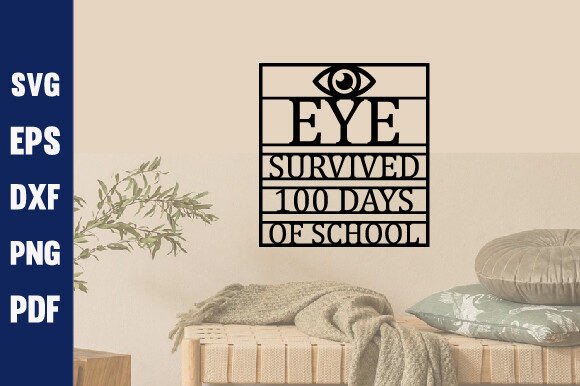
As a designer who spends more time staring at stitch maps than most people care to admit, I approach every new machine embroidery design with a mix of curiosity and skepticism. When I first pulled up the Eye Survived 100 Days of School Laser file on my screen, my initial reaction was one of amusement followed immediately by practical calculation. This isn't just a cute graphic; it is a statement piece for a major milestone in a child's academic journey. The theme is playful, leveraging the popular "I survived" trope but twisting it with a laser-cut aesthetic that suggests precision and modern flair. For those of us running a craft business or selling on Etsy, understanding how this Graphics asset translates from a vector line into actual thread is crucial before we promise a finished product to a customer.
First Impressions and Visual Personality
The visual personality of Eye Survived 100 Days of School Laser is bold and slightly edgy, which sets it apart from the typical pastel-heavy, cursive fonts we often see in baby and school-themed embroidery projects. The "laser" aspect implies sharp lines and a geometric feel. In an embroidery file, this usually translates to clean satin columns or tight fill stitches that mimic the look of a cut-out stencil. The mood is celebratory yet resilient, perfectly capturing the exhaustion and pride a student feels after reaching the 100-day mark.
From a layout perspective, the design feels versatile. It has the potential to work as a central chest logo on a sweatshirt embroidery project or as a fun accent on a tote bag design. However, because it relies on a specific "laser" aesthetic, the integrity of those lines is paramount. If the digitizing is poor, those sharp edges will turn into mushy blobs of thread, ruining the intended effect. My first instinct was to zoom in to 400% to check the node points and stitch direction, looking for any potential pull issues that might distort the text or the eye graphic.
Real-World Application: The Custom Tote Scenario
To truly evaluate this design, I imagined a real-life scenario: a parent ordering a custom handmade product for their kindergartener to carry on the 100th day of school. They want something durable, washable, and photogenic for social media. I decided this Eye Survived 100 Days of School Laser would be perfect for a canvas tote bag or a sturdy cotton apron.
In this context, the design needs to hold up against the texture of the fabric. Canvas has a weave that can sometimes swallow small details. If the stitch density is too low, the background fabric will peek through, breaking the solid "laser cut" illusion. Conversely, if the density is too high, the fabric might pucker, especially on a flexible item like a bag. I envision using a heavy-duty cutaway stabilizer here to ensure the sharp lines remain crisp after the child inevitably stuffs the bag with 100 items of various shapes and sizes. The contrast of bright thread colors against a natural canvas would make the "laser" effect pop, creating a high-value personalized gift that looks professional rather than homemade in the negative sense.
Navigating Fabric Challenges and Hoop Constraints
While the design is striking, there are areas where caution is required. Not every surface is suitable for this level of detail. If you are attempting this on a stretchy jersey knit for a custom apparel order, you must be vigilant. The sharp corners inherent in a laser-style design are prone to pulling on knits if the underlay isn't sufficient. I would advise testing this on scrap fabric of the exact same weight and stretch before committing to a client's garment.
Furthermore, consider the hoop size. School-themed designs often need to be large enough to be readable from a distance, especially in classroom photos. If your machine has a small hoop limitation, you might find yourself needing to split the design or reduce it to a point where the tiny lettering becomes illegible. Tiny text is the enemy of embroidery; if the "100" or the word "School" gets too small, the threads will merge. Always check the minimum recommended size provided with the digital embroidery file. If that information isn't explicit in the Crafts listing, stitch a test run on a cheap towel first.
Dark fabrics present another challenge. The "laser" look often relies on negative space or high contrast. Stitching light threads on a black hoodie requires excellent coverage. You may need to adjust your thread colors or add an additional layer of underlay stitching to prevent the dark fabric from shadowing the design. This is particularly important for holiday embroidery or winter gear where dark colors are prevalent.
Commercial Viability and Brand Consistency
For the Etsy seller or boutique owner, the appeal of Eye Survived 100 Days of School Laser lies in its trendiness. It taps into a specific seasonal demand without looking generic. Using this design can enhance your brand's reputation for offering modern, cool kids' wear rather than the same old clip-art styles found everywhere else. It adds a layer of perceived value to your small shop product lineup.
However, professionalism is key. A sloppy stitch-out of a sharp design looks worse than a sloppy stitch-out of a soft design because the expectation of precision is higher. Ensure your tension is dialed in. The visual appeal of this design directly impacts customer trust. If the "laser" lines look wavy or the fill stitches gap, the customer will question the quality of the entire garment. On the flip side, a crisp, clean execution can justify a higher price point and encourage repeat buyers looking for unique design assets for their children.
Final Designer Notes and Best Practices
Before you list this as a commercial embroidery option or use it for a batch of gifts, take these practical steps:
- Test on Scrap: Never skip the test stitch. Verify how the design behaves on the specific fabric texture you plan to use.
- Check Contrast: View your mockups in black and white to ensure the design stands out regardless of color choices.
- Review Density: Look closely at the fill areas. Are they too open? Too dense? Adjust your stabilizer accordingly.
- Verify Licensing: Since this is described as a vector file suitable for laser and CNC, confirm the license terms regarding embroidery usage. Some files sold for cutting machines have restrictions on digitizing or reselling as embroidery files.
- Inspect Details: Zoom in on the corners of the letters and the eye graphic. These are the failure points for complex designs.
In conclusion, Eye Survived 100 Days of School Laser is a promising asset for the creative entrepreneur willing to pay attention to the technical details. It bridges the gap between digital precision and tactile craft. Whether you are making a single embroidered patch for a backpack or a dozen baby embroidery onesies, this design offers a fresh take on a classic milestone. With the right preparation, fabric choice, and stitching technique, it can become a standout piece in your portfolio, proving that you not only survived the design process but mastered it.