I Turn Coffee into Psych Reports: A Designer's Review
As someone who spends more time at the hoop than I do sleeping, I am always skeptical of text-heavy designs that promise to be "cute" but end up looking like a tangled mess of thread. When I first encountered I Turn Coffee into Psych Reports, my initial reaction was a mix of amusement and professional caution. The concept is undeniably relatable for anyone in the mental health field, specifically school psychologists who run on caffeine and crisis management. However, as a designer, my job isn't just to like the message; it is to ensure that the embroidery file translates that message into a high-quality finished product that holds up under scrutiny.
The visual personality of this design leans heavily into the niche humor of the profession. It creates an immediate mood of weary professionalism mixed with a dash of self-deprecating wit. For a craft business targeting educators and therapists, this kind of specific, insider humor is gold. It builds instant recognition and trust with the buyer because it speaks their language. But before you list this as a new Etsy seller item or stitch it onto a client's favorite hoodie, we need to talk about how this graphic actually behaves when converted from a digital asset to physical stitches.
Real-World Application: The Tote Bag Test
To truly evaluate I Turn Coffee into Psych Reports, I imagined a specific real-life scenario: creating a custom tote bag for a school psychologist's end-of-year appreciation gift. Tote bags are popular handmade products, but they present unique challenges due to the weave of the canvas and the potential for distortion. If you were to apply this design to a standard canvas tote, the text layout becomes the critical factor. The phrase is long, which means the design likely relies on a linear arrangement or a stacked format.
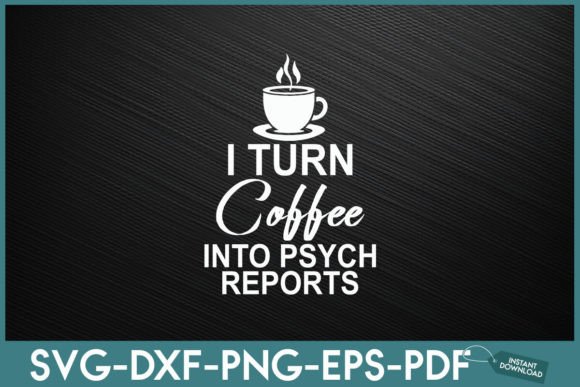
In a stacked layout, the word "Coffee" might serve as a visual anchor, perhaps accompanied by a small graphic element like a mug or steam. If the original Graphics file includes such icons, you must verify if they are detailed enough for embroidery. Tiny details that look crisp on a screen can vanish under a satin stitch or become a bird's nest of running stitch if the scale is too small. For a tote bag, you would want to ensure the lettering is bold enough to be read from a distance. A thin, script-style font might get lost in the texture of the canvas, whereas a blockier font would pop better and withstand the rigors of being thrown into a staff room corner.
If you are considering this for sweatshirt embroidery, the stakes change slightly. The loft of fleece or French terry can swallow small stitches. In this context, I Turn Coffee into Psych Reports would shine best on the chest or sleeve where the fabric is flatter. The humor lands well here because it turns a standard piece of custom apparel into a conversation starter during staff meetings. It adds a layer of personality that generic "Teacher" shirts lack, elevating the perceived value of the garment.
Navigating Technical Challenges
Let's address the elephant in the room: text embroidery is unforgiving. When evaluating a design like this, you have to be hyper-aware of stitch density. If the letters are too close together, the threads will bridge and merge, turning legible words into an unreadable blob. This is especially true if you are working with a machine embroidery design that wasn't digitized with variable density in mind. Before committing to a final project, it is crucial to test the design on scrap fabric that matches your intended material.
There are specific situations where you should use I Turn Coffee into Psych Reports with extreme caution. First, consider small hoop sizes. If the design is intricate, trying to force it into a 4x4 hoop might compromise the stability of the stitching or require excessive jumping, which weakens the structure. Second, think about textured fabrics like waffle knit or heavy towels. The uneven surface can cause the needle to deflect, leading to skewed lettering. Third, be wary of stretchy fabric unless you are an expert with stabilizers. Without a robust cut-away stabilizer, the movement of the fabric during wear can distort the text, making the "Psych Reports" line look wavy and unprofessional.
Dark fabrics present another hurdle. If the design relies on fine lines, you may need to adjust the thread colors for maximum contrast. A light grey thread on a black sweatshirt might look sophisticated in a mockup but invisible in real life. Always test your design in both light and dark backgrounds. Furthermore, if you plan to put this on a curved surface like a cap, the center of the design needs to be perfectly aligned, and the edges need to be short enough to avoid wrapping around the curve, which causes puckering.
Enhancing Brand Value and Customer Trust
Why does any of this technical detail matter? Because the quality of your stitching directly impacts your brand consistency and customer trust. When a school psychologist buys a shirt with I Turn Coffee into Psych Reports on it, they aren't just buying a shirt; they are buying a badge of honor for their difficult job. If the letters are fraying or the spacing is off, it reflects poorly on your small shop product quality. Conversely, a clean, crisp execution reinforces your reputation as a skilled artisan.
This design has strong potential for commercial embroidery projects beyond just clothing. Imagine an embroidered patch for a lanyard or a badge reel. Patches are trendy and allow for dense stitching on a stable backing, which is ideal for text-heavy designs. They also offer a low-risk way for customers to try out the design without committing to a whole garment. Additionally, this could work beautifully on a kitchen towel or apron for the psychologist who loves to unwind at home, bridging the gap between work identity and personal life.
For those selling digital embroidery files or design assets, the presentation is key. A high-quality printable mockup showing the design on various textures helps the buyer visualize the end result. However, remember that the source material described this as an SVG for cutting machines. If you are adapting this for embroidery, you are likely digitizing it yourself or purchasing a converted version. Always confirm the licensing terms. Just because a file is sold as a Crafts item for cutting does not automatically grant rights for commercial embroidery sales. Clarify these details to protect your business.
Final Verdict and Practical Tips
I Turn Coffee into Psych Reports is a winner in terms of concept and market appeal. It hits a sweet spot for a specific demographic that is often underserved in the novelty gift market. However, its success relies entirely on execution. To ensure the best results, follow these practical steps:
- Test on scraps first: Never stitch a text design directly onto the final garment without a trial run on similar fabric.
- Check thread contrast: Ensure your thread color stands out sharply against the fabric background.
- Review stitch density: Look for areas where stitches might be too close and adjust if your software allows, or choose a thicker thread weight.
- Confirm hoop size: Make sure your hoop can accommodate the full width of the text without re-hooping, which risks misalignment.
- Inspect small details: Zoom in on the digitized file to check for unnecessary jumps or trims that could weaken the text.
- Use proper stabilizer: For text, a firm cut-away stabilizer is usually safer than tear-away, especially on stretchy knits.
- Verify licensing: Double-check the original product description to ensure you have the right to sell finished items made with this design.
In conclusion, while the source file originates in the world of vector graphics and cutting machines, its potential in the embroidery world is significant if handled with care. By respecting the limitations of thread and fabric, you can turn this witty phrase into a durable, cherished personalized gift or a best-selling item in your craft business. The key is to treat the design not just as an image, but as a structural challenge that, when solved, delivers immense value to the wearer.